0%

When it comes to sourcing industrial UAVs globally, it's way more than just comparing prices, payload capacities, or flight durations. Buyers really need to connect their operational needs with factors like safety, compliance, ease of maintenance, and how well the supplier performs overall. For example, a drone that's perfect for inspecting coastlines might not hold up in dusty mines, freezing warehouses, or humid plantations—environment really changes everything.

Smart procurement teams start with the mission in mind. They’ll consider things like flight range, sensor precision, wind resistance, operating temperatures, data security, and maintenance schedules. Sometimes, doing a practical test is the best way to spot issues that can't be caught by reading specs—like batteries losing capacity after multiple cold starts, or cameras struggling in low morning light. These little details really matter in the long run.

Making reliable decisions also means asking for proper documentation. It's a good idea to request test reports, training certifications, warranty details, spare parts plans, and software update policies from suppliers. And don’t forget to check if their operations meet the rules set by aviation authorities and local procurement laws. While ISO certifications can help, don’t rely solely on those—seeing real-world evidence from the field is crucial. No checklist is perfect, after all.

How a supplier handles problems is just as important as what their specs say. For instance, can their technicians diagnose a cracked landing gear within a few hours? Are the replacement batteries clearly traceable? Is technical support available nearby? Asking these questions early on can reveal practical weaknesses. Plus, it helps you get a full picture of total ownership costs—sometimes, the cheapest drone ends up costing more in repairs and downtime over time.

This guide walks you through a systematic way to pick the right industrial UAVs in different international markets. It considers everything from aircraft design and payload setup to cybersecurity, training, logistics, and after-sales support. And it also recognizes that things can be uncertain—markets evolve, specs get misunderstood, and surprises happen. So, thorough validation and careful checks are always important to make the right choice.

How to Choose Industrial UAVs for Global Procurement?

Industrial UAVs: Definition, Applications, and Procurement Objectives

How to Choose Industrial UAVs for Global Procurement?

Industrial UAVs are unmanned aircraft designed for professional work, not recreational flying. They combine aircraft systems, sensors, software, and controlled communications.

Common applications include infrastructure inspection, agricultural mapping, construction surveys, mining assessments, and emergency planning. A UAV can inspect a bridge joint closely, produce a roof map, or measure crop stress across large fields. Its value depends on reliable data, safe operation, and practical field support.

Global procurement should begin with clear objectives. Define the required flight time, payload, image quality, weather tolerance, and operating range. Consider whether teams need thermal cameras, laser scanning, or high-resolution visual data.

Procurement teams should also check training, maintenance, spare parts, cybersecurity, data ownership, and local aviation requirements. Experience shows that impressive specifications can hide weak service networks.

A perfect specification rarely exists. Field conditions may expose assumptions made in an office.

Tips:

Test the UAV in realistic wind and temperature conditions.

Request sample data from similar inspections.

Compare total ownership costs, not only the purchase price.

Confirm repair procedures and software updates before signing.

Keep a written compliance checklist for every target market.

A short pilot project can reveal battery limits, communication gaps, and operator training needs before large-scale deployment.

Key Specifications for Comparing Industrial UAV Platforms

How to Choose Industrial UAVs for Global Procurement?

Industrial UAV selection should begin with measurable platform specifications, not attractive demonstrations. Grand View Research estimated the global commercial drone market at US$30.61 billion in 2022, with a 13.9% CAGR projected through 2030. That growth increases supplier choices, but also complicates comparison. Procurement teams should record maximum takeoff weight, useful payload, flight endurance, operating temperature, wind resistance, and IP protection. Payload matters. A platform carrying a thermal camera for 25 minutes may outperform a lighter aircraft rated for 40 minutes.

Sensor performance requires practical testing. Compare thermal resolution, radiometric accuracy, optical zoom, low-light performance, and geotagging precision. The operator interface also matters. MarketsandMarkets forecasts the drone software market to reach US$11.6 billion by 2028, reflecting rising demand for analytics and fleet management. Yet software claims can hide workflow gaps. Test data export, offline operation, user permissions, maintenance alerts, and integration with existing mapping systems. Field trials should include a cold morning, strong wind, and a cluttered worksite.

Communication specifications deserve equal attention. Evaluate control range, encryption, network fallback, latency, and loss-link behavior under approved operating conditions. Battery cycle life and charging time directly affect daily productivity. A mistake worth admitting: buyers often compare aircraft prices while ignoring spare batteries, training, storage, repairs, and software subscriptions. Calculate total cost over three years. Request documented test methods, failure rates, service response times, and regional certification evidence. Not every published number survives real work. Test it outdoors.

Regulatory and Certification Requirements Across Global Markets

How to Choose Industrial UAVs for Global Procurement?

Regulatory compliance should shape procurement before payload, range, or battery life. Requirements differ sharply between markets.

In the European Union, buyers must check product class, conformity assessment, remote identification, and operating-category rules under Regulations 2019/945 and 2019/947. In the United States, commercial operations generally require remote pilot certification and operational compliance under Part 107.

The Federal Aviation Administration reported more than 785,000 registered drones in 2023, including over 300,000 commercial units. That scale increases scrutiny.

Documents matter.

A supplier should provide conformity declarations, test reports, radio approvals, cybersecurity controls, and maintenance records. Ask for evidence, not promises.

The International Civil Aviation Organization’s 2023 safety report recorded 36 accidents involving scheduled commercial air transport, showing why aviation-grade risk management remains essential. Industrial UAVs may not carry passengers, but weak systems can still affect airports, workers, and public infrastructure.

Local approval can also depend on weight, altitude, geography, and data handling. A platform accepted in one country may need new radio or privacy assessments elsewhere.

I once treated certification as a purchasing checkbox; that was too simplistic.

Certificates can expire, and operating permissions remain site-specific. Procurement teams should map every target market, appoint a compliance owner, and budget for software updates and renewed testing.

Some requirements remain unclear. That uncertainty deserves a contingency plan, not optimistic assumptions.

Supplier Evaluation, Manufacturing Quality, and Supply Chain Reliability

How to Choose Industrial UAVs for Global Procurement?

Supplier evaluation should begin with evidence, not impressive flight videos. Request audited quality records, production capacity, defect rates, and corrective-action reports. A factory should identify each aircraft through serial numbers, batch records, and component traceability. Ask to inspect assembly lines, calibration tools, environmental test chambers, and final inspection areas. Small details matter. Loose wiring can become a field failure.

Manufacturing quality needs measurable acceptance criteria. Check flight endurance under defined payloads, wind conditions, and temperature ranges. Review battery-cycle data, software change controls, and spare-parts availability. ISO 9001 certification helps, but it does not replace an independent audit. That is a common procurement mistake. Require pilot samples before approving volume production, then compare every batch against the approved sample.

Supply chain reliability deserves equal attention. McKinsey’s 2020 global survey found that 93% of supply chain leaders planned to increase resilience after major disruptions. Build that resilience into contracts through lead-time commitments, safety stock, alternate component sources, and transparent escalation procedures. The World Bank’s 2023 Logistics Performance Index also highlights significant differences in shipment reliability across markets. Evaluate customs documents, packaging tests, insurance responsibilities, and service response times. A supplier may offer a low unit price, yet delayed batteries or missing firmware can stop an entire operation. Test recovery plans before problems arrive.

Total Cost of Ownership, Service Support, and Warranty Considerations

Choosing an industrial UAV for global procurement requires more than comparing purchase prices. The real cost begins after delivery, when batteries age, software needs updates, and trained operators request help. In field evaluations, I build a five-year total cost model for each aircraft. It includes payloads, spare batteries, charging equipment, training, insurance, transport, inspections, and labor. A low quote can become expensive. Our first spreadsheet was too optimistic.

Service support deserves the same scrutiny as flight performance. Ask where replacement parts are stocked, how tickets are handled, and whether technicians work across time zones. Request response-time targets in writing. A practical supplier should provide diagnostic procedures, maintenance intervals, firmware guidance, and operator training records. Remote support may solve a sensor issue, but a damaged airframe could need regional repair capacity. Test this process before signing; an unanswered support email reveals more than a polished presentation.

Warranty terms often hide the largest procurement risks. Check coverage periods, battery exclusions, water or dust limitations, shipping responsibility, and approval rules for repairs. Clarify whether updates remain available during the warranty period. Also ask what happens when a component is discontinued. A longer warranty is not automatically better. Its value depends on usable service and clear claims evidence. Keep serial numbers, flight logs, inspection photos, and maintenance records organized from day one. One uncomfortable question remains: can the supplier support every operating region for the aircraft’s expected life?

Testing, Risk Assessment, and Final UAV Selection Procedures

Global procurement should treat industrial UAV selection as an evidence-based engineering decision. Drone Industry Insights’ Drone Market Report 2024 projects the global drone market to reach about USD 54.6 billion by 2030. Growth increases supplier choices, but also raises verification risks. Request flight logs, battery-cycle records, payload accuracy data, and maintenance history. Test the aircraft in wind, dust, low temperatures, and weak-connectivity areas. Measure endurance with the intended payload, not an empty frame. That difference can be substantial.

Risk assessment must cover hardware, software, operators, data, and local airspace requirements. The EASA Annual Safety Review 2024 emphasizes structured safety management and occurrence reporting across aviation operations. Create a scoring matrix before reviewing quotations. Give separate scores for fail-safe behavior, navigation reliability, cybersecurity controls, spare-parts access, training, and total operating cost. A laboratory demonstration is not enough. Field performance may disappoint.

Tips: Use a three-stage test: document review, controlled flight, and representative mission. Keep raw test files. Invite an independent engineer to witness critical trials. Avoid selecting the cheapest compliant unit. That shortcut often becomes expensive. Also, challenge your own assumptions: a longer advertised flight time may hide slow payload movement, frequent battery replacement, or difficult repairs. Final selection should require repeatable results, clear service commitments, and documented acceptance thresholds. No perfect UAV exists. There is only a defensible choice for a defined mission.

How to Choose Industrial UAVs for Global Procurement? - Testing, Risk Assessment, and Final UAV Selection Procedures
Evaluation Item Mission and Airframe Capability Acceptance Test Results Risk Assessment Final Selection
Maximum Take-Off Mass Useful Payload Typical Endurance Operating Environment Payload-Lift Test Endurance Test Wind-Resistance Test Communications Test Primary Risk Risk Level Required Mitigation Weighted Score Procurement Decision
UAV Class A: Compact Multirotor 7.0 kg 1.5 kg 35 minutes -10°C to 45°C; IP43 1.5 kg for 28 min 32 min at 0.8 kg 11 m/s; reduced hover margin 8 km line-of-sight link Limited endurance in cold weather Medium Use heated batteries and maintain reserve packs 78 / 100 Reserve for short-range inspection
UAV Class B: Heavy Multirotor 25.0 kg 7.0 kg 42 minutes -20°C to 50°C; IP54 7.0 kg for 31 min 39 min at 3.0 kg 14 m/s; stable control 10 km line-of-sight link Higher logistics and battery-handling burden Medium Provide certified transport cases and battery procedures 86 / 100
UAV Class C: Fixed-Wing Survey Aircraft 12.0 kg 1.2 kg 150 minutes -15°C to 45°C; IP54 1.2 kg for 118 min 142 min at 0.5 kg 12 m/s; launch required 30 km line-of-sight link Requires launch and recovery area Medium Approve site-specific launch plans and recovery procedures 91 / 100
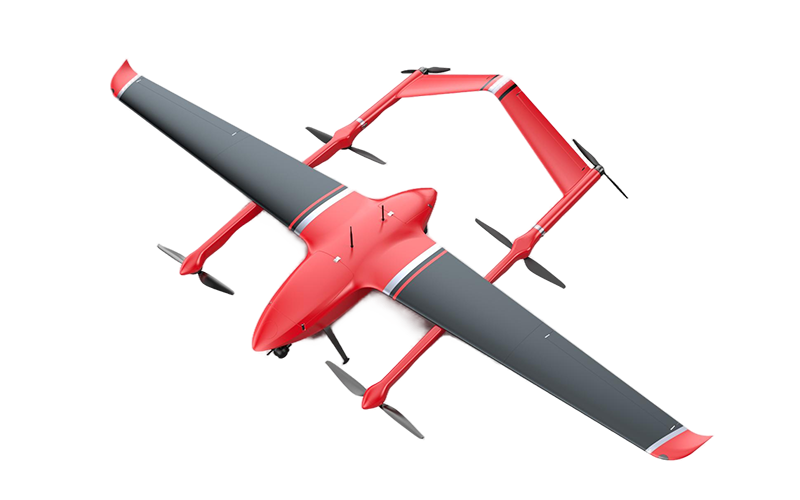
UAV Class D: Vertical-Takeoff Fixed-Wing 18.0 kg 2.5 kg 120 minutes -20°C to 50°C; IP54 2.5 kg for 94 min 113 min at 0.8 kg 13 m/s; automatic transition completed 25 km line-of-sight link Transition and recovery software complexity Medium Require transition demonstrations and software-version control 89 / 100
UAV Class E: Cargo Multirotor 45.0 kg 15.0 kg 30 minutes -10°C to 40°C; IP44 15.0 kg for 22 min 27 min at 5.0 kg 10 m/s; payload swing observed 6 km link with heavy payload Payload stability and short flight time High Limit wind operations and use mechanical payload restraint 72 / 100 Not selected for general procurement
UAV Class F: Indoor Inspection Multirotor 2.0 kg 0.4 kg 22 minutes 0°C to 40°C; protected indoor use 0.4 kg for 18 min 20 min at 0.2 kg Indoor airflow test completed 500 m through reinforced structure Signal attenuation in industrial buildings Medium Perform radio surveys and deploy approved relay nodes 80 / 100 Reserve for indoor inspection tasks
Procurement procedure: Verify documentation, conduct laboratory inspection, perform payload and endurance trials, test communications and environmental limits, score operational and supply-chain risks, complete regulatory review, and approve only the UAV classes that meet the mission threshold. Acceptance should include spare-parts availability, operator training, software-update control, cybersecurity requirements, insurance, export compliance, and local aviation permissions.

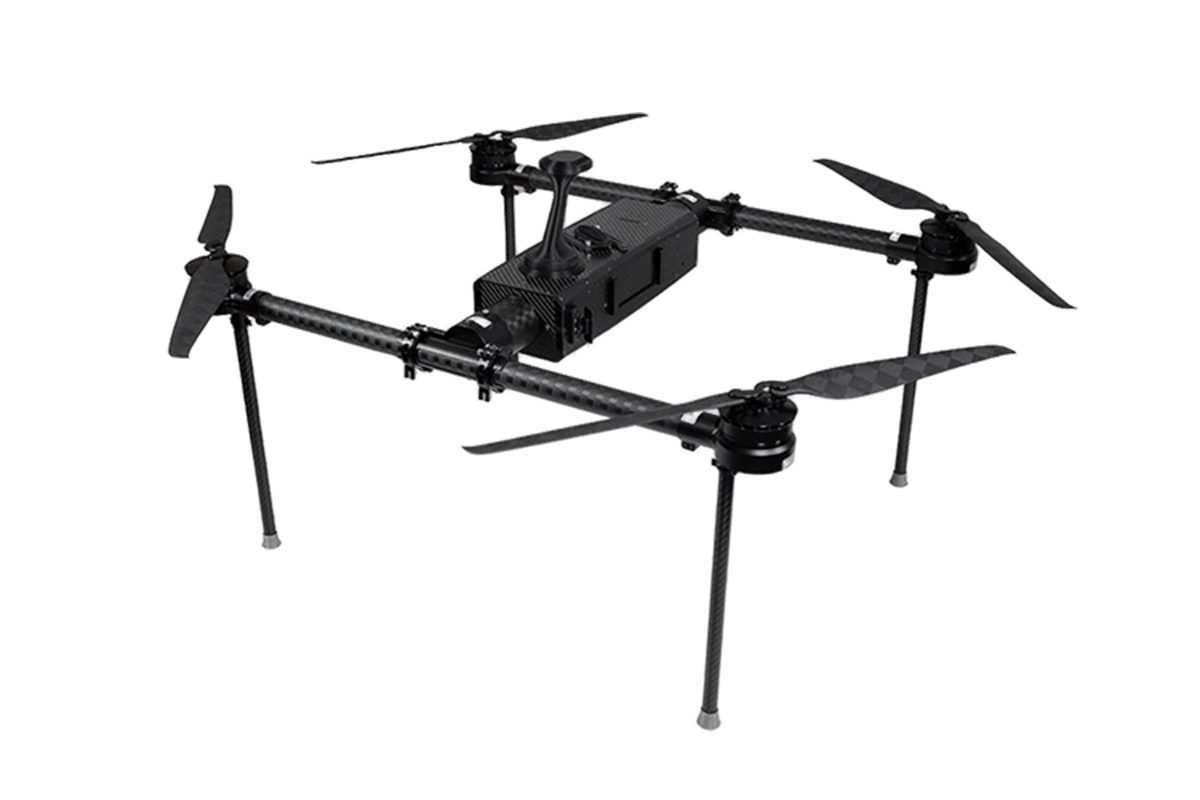
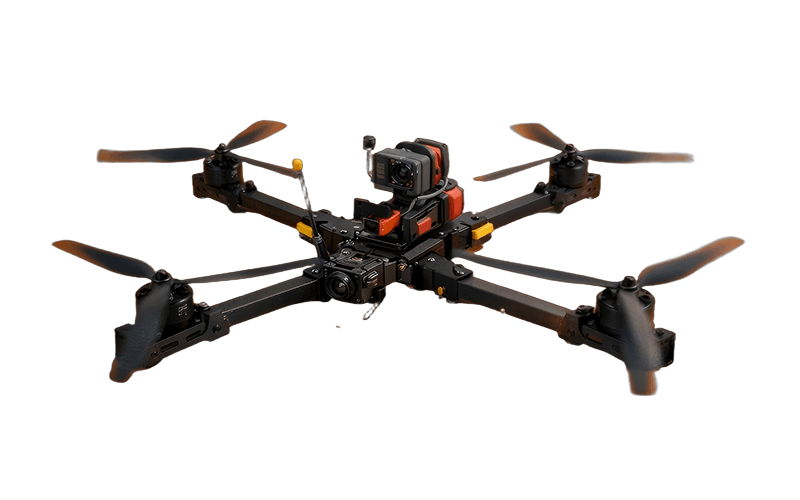
KEEL: The Modular Industrial Drone Built for Ultra-Long Flight Missions

Designed for ultra-long flight missions, this modular industrial drone is built to extend operational coverage while reducing the need for frequent landings and battery changes. Its configurable architecture can support professional payloads such as high-resolution imaging systems, thermal sensors, mapping equipment, and environmental monitoring tools. This flexibility is increasingly valuable as the global commercial drone market continues to expand; Fortune Business Insights projects the sector to grow from approximately $73.3 billion in 2024 to $163.6 billion by 2030, reflecting rising demand for reliable aerial data and automation.

Long-range operations require more than a large battery. Efficient propulsion, aerodynamic design, intelligent power management, and stable communications must work together to maintain dependable performance over extended missions. The modular platform is engineered for applications including infrastructure inspection, precision surveying, disaster assessment, energy-site monitoring, and industrial logistics planning. According to the 2024 Drone Industry Insights market analysis, enterprise and public-sector use cases remain key drivers of professional drone adoption, particularly where aerial access can improve safety and reduce inspection time. With adaptable payload integration, mission-planning software, and professional-grade flight controls, this industrial aircraft provides the endurance and versatility required for demanding, regulation-compliant operations.

FAQS

What are industrial UAVs used for?

Industrial UAVs support infrastructure inspection, agricultural mapping, construction surveys, mining reviews, and emergency planning. A bridge joint, roof, or crop field can be inspected from above.

How should procurement teams define their objectives?

Define flight time, payload, image quality, weather tolerance, operating range, and required sensors. A thermal camera may matter more than extra endurance.

Which specifications deserve direct comparison?

Compare takeoff weight, payload capacity, endurance, operating temperature, wind resistance, and IP protection. Published figures can disappoint.

How should sensor performance be evaluated?

Test thermal resolution, radiometric accuracy, optical zoom, low-light performance, and geotagging precision. Request sample data from similar fieldwork.

What software capabilities should buyers test?

Check data export, offline operation, user permissions, maintenance alerts, and mapping-system integration. A polished interface is not enough.

Why are communication systems important?

Evaluate control range, encryption, network fallback, latency, and loss-link behavior under approved conditions. Communication gaps can stop a mission quickly.

What costs should be included in the procurement budget?

Include aircraft, sensors, batteries, training, storage, repairs, software subscriptions, and maintenance. Calculate ownership costs over three years, not only purchase price.

How can buyers reduce deployment risks?

Run a short pilot in realistic wind, temperature, and worksite conditions. Test a cold morning. Review battery limits, operator skills, data quality, and repair procedures. Our assumptions may be wrong.

Conclusion

Industrial Uavs are valuable tools for surveying, infrastructure inspection, agriculture, emergency response, mapping, and other professional operations. Choosing the right platform begins with clearly defining the mission, operating environment, payload needs, flight endurance, range, navigation accuracy, data security, and automation requirements. Buyers should compare aircraft performance, sensor compatibility, communication reliability, environmental resistance, safety features, and ease of maintenance to ensure the system fits both current and future projects.

Global procurement also requires careful review of local aviation rules, registration procedures, operating permissions, export controls, and relevant safety certifications. Supplier evaluation should cover manufacturing consistency, quality-control processes, production capacity, spare-parts availability, delivery stability, and technical support. In addition to the purchase price, organizations should calculate total cost of ownership, including training, software, batteries, maintenance, insurance, upgrades, and warranty coverage. Before final selection, buyers should conduct documented testing, assess operational and supply-chain risks, verify supplier commitments, and choose the UAV solution that offers the best balance of performance, compliance, reliability, and long-term value.

Charlotte

Charlotte

Charlotte is a dedicated marketing professional with a deep expertise in the UAV systems developed by UUUFLY. Her commitment to integrated innovation across hardware, algorithms, and data operations positions her as a driving force in delivering cutting-edge solutions for power, agriculture, and......
Previous China Top 10 Professional Drone Manufacturers?